Indian Sitar
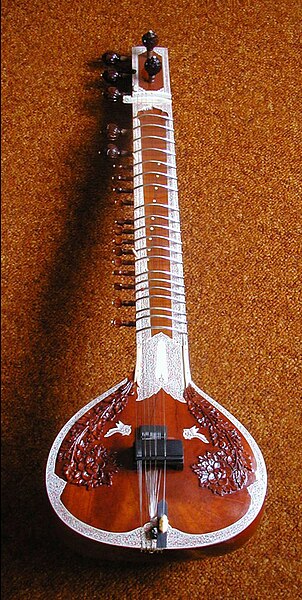
The sitar is a plucked stringed instrument predominantly
used in Indian and Pakistani classical music. It gets its sound from its hollow
base, curved frets that move under sympathetic strings, known as taarif. A
sitar can have 21, 22, or 23 strings, among them there are six or seven strings
that run over the frets.
The frets are movable, which allows for more accurate
playing and fine tuning. The Sitar is made out of Teak wood. Teak wood is found
in places such as Africa and the Caribbean
The instrument is balanced between the player's left foot and right knee. The hands move freely without having to carry any of the instrument's weight. The player plucks the string using a metallic pick called a mizraab. The thumb stays on the top of the fretboard just above the main gourd. Generally only the index and middle fingers are used for fingering although a few players occasionally use the third.

No comments:
Post a Comment